Celebrating the Winter Solstice: Entering the Darkness, Inviting the Light |
|
The winter solstice marks the longest night of the year, a pause in the cycle of time when darkness reaches its fullest expression. Across cultures and epochs, this moment has not been understood as something to resist, but honoured as a threshold: a sacred pause between what has ended and what has yet to begin. In ancient pagan traditions, from Northern Europe to the Mediterranean, the solstice was celebrated as the rebirth of the sun. Festivals such as Yule, an early Germanic pagan festivity, marked this night as a turning point, when the sun god was believed to be reborn from darkness. Rather than symbolizing an end, the solstice represents a quiet reversal: from this night onward, light begins its gradual return, not all at once but slowly, almost imperceptibly. It is a moment for reflection, for releasing what has reached its limit, and for setting intentions that unfold with the lengthening days.
This understanding of light emerging from darkness was later absorbed into Christian symbolism, where the birth of Christ, celebrated near the solstice, came to embody spiritual illumination entering a shadowed world. Here, the emphasis remained not on spectacle, but on humility, stillness, and inward transformation.
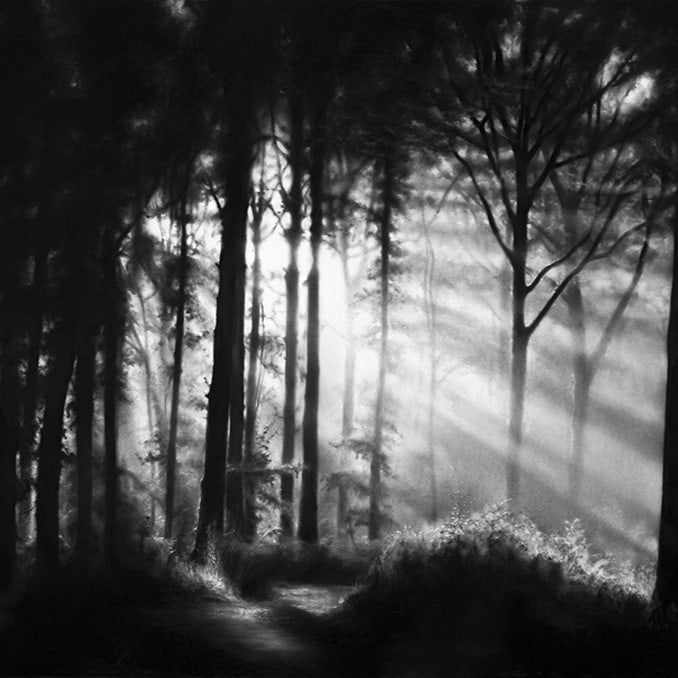
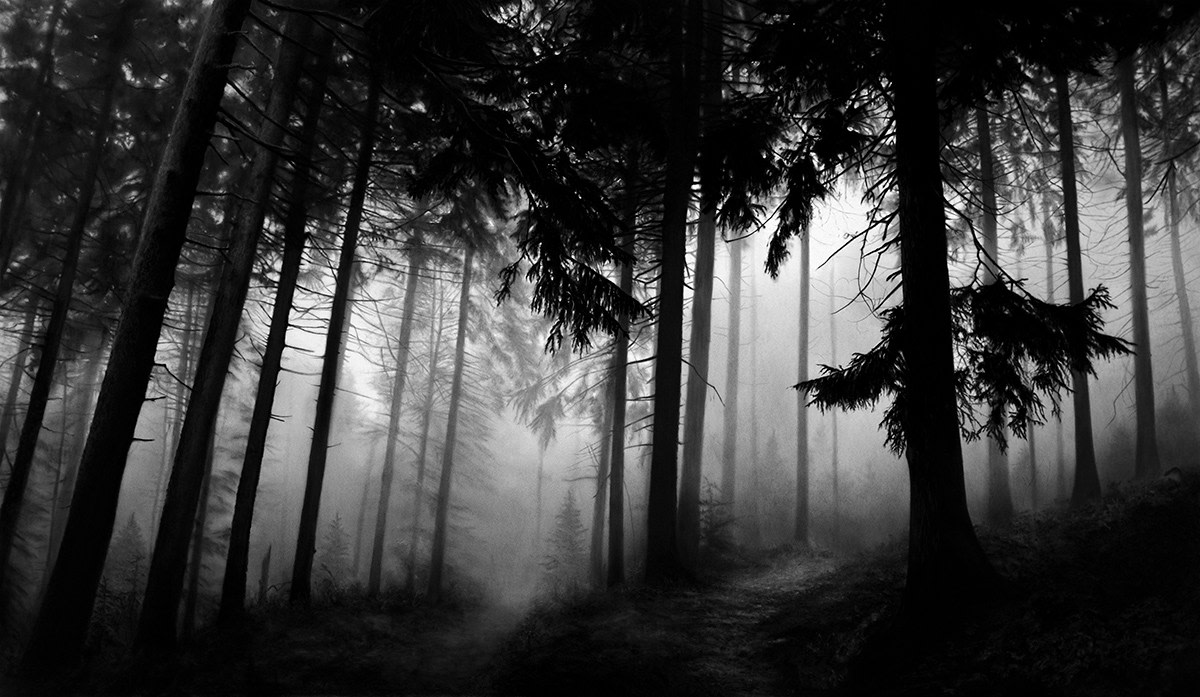
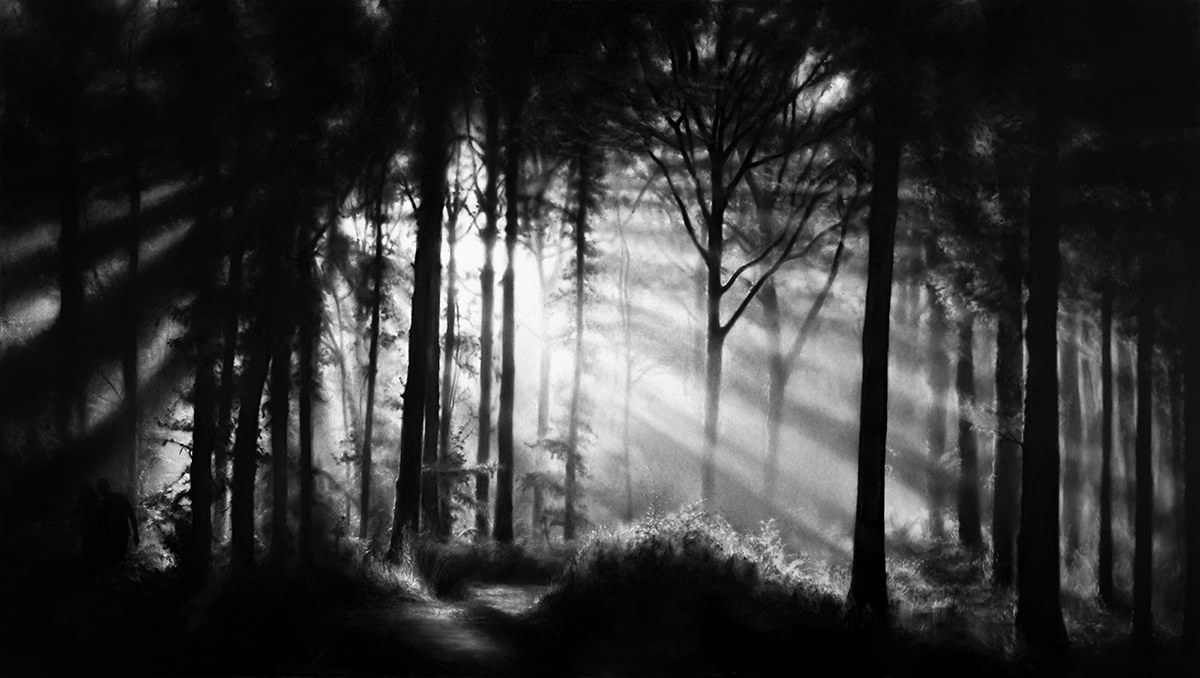
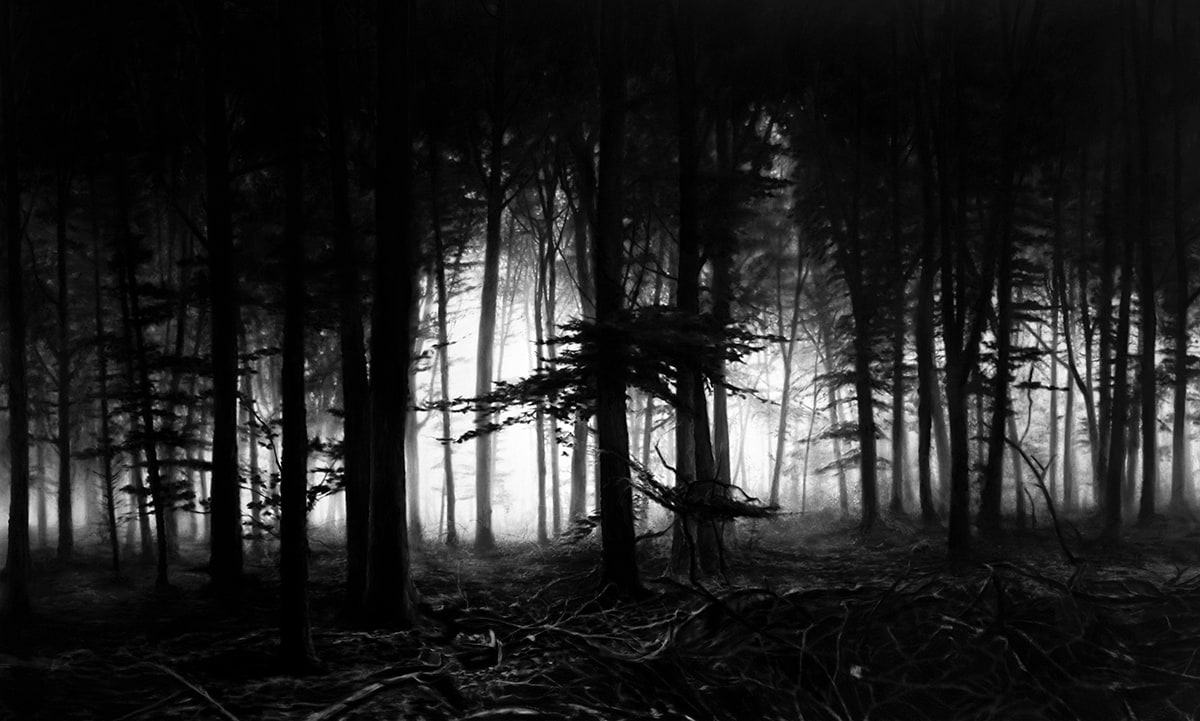
This quiet spiritual threshold finds a profound visual counterpart in Robert Longo’s (b. 1953) forest works. |
|
|
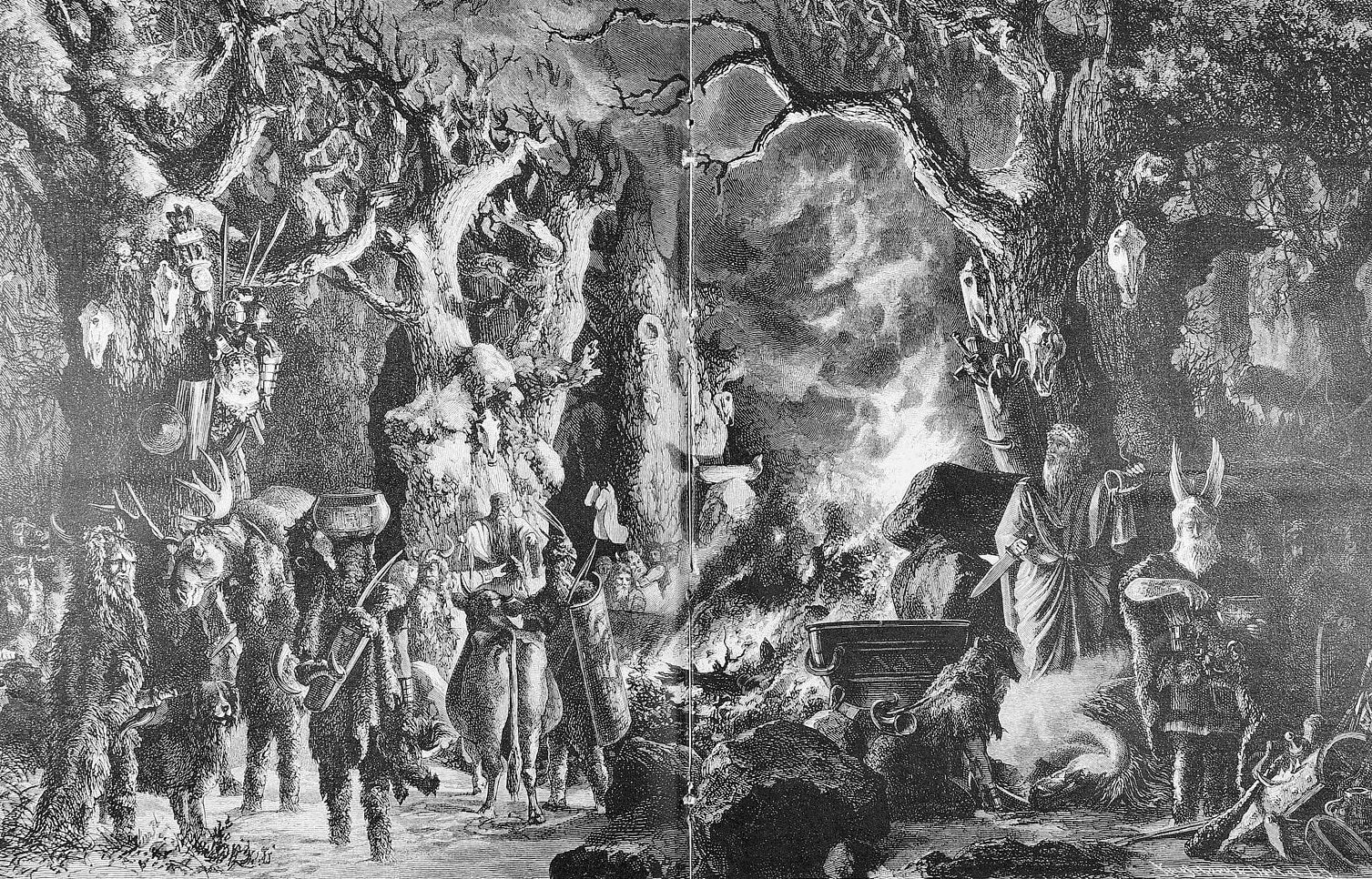
| Die Gartenlaube (1880) Illustration of an ancient Nordic Yule Festival | |
|
The Forest as Inner Landscape
|
|
Forests have long been understood as symbolic spaces: places of initiation, introspection, and transformation. In myth and literature, they are sites where certainty dissolves, where familiar paths disappear, and where one must proceed without clear orientation. To enter the forest is to enter the unknown. In Fairmount Forest (2014), Forest of Doxa (2014), and In the Garden, Et in Arcadia Ego (2014), Longo transforms the forest into an inner landscape. Executed in stark black and white, these works envelop the viewer in dense shadow, offering no horizon, no panoramic release. The experience is immersive, even confronting - but never empty. Light filters through the trees in fragments, breaking through the canopy with a restrained, almost sacred presence. It does not conquer the darkness; it coexists with it. This echoes not only Western solstice traditions, but also Eastern philosophies, where darkness and light are understood as interdependent forces rather than opposites. In the ancient Chinese Taoist thought, for example, yin and yang continually give rise to one another: stillness generating movement, darkness allowing light to emerge.
|
|
|
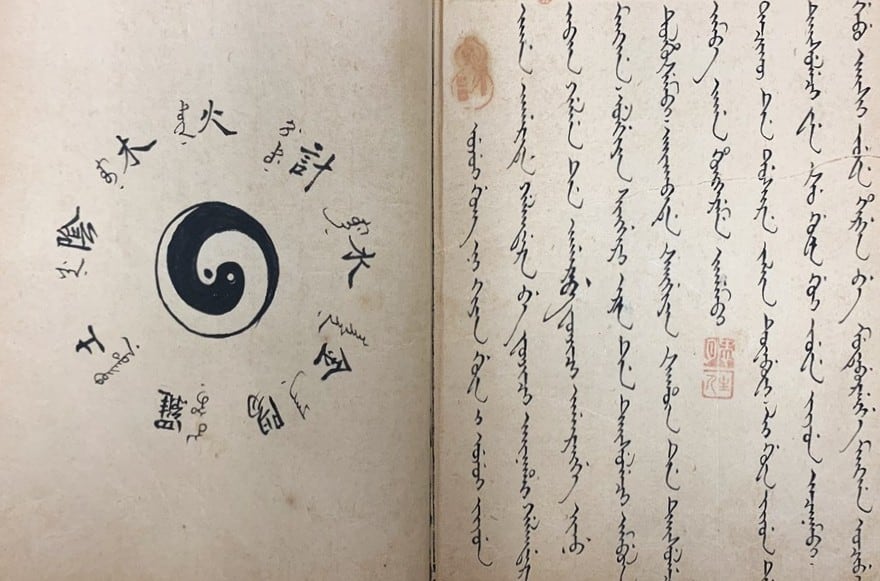 | Taoist illustration from the first volume of Nenehe abkai ton. M9155/6525 (date uncertain, probably 16th-17th Century), East Asian Collection of the University of Chicago Library. | |
|
The winter solstice teaches us that transformation rarely announces itself. It unfolds gradually, through attention, patience, and the willingness to remain present in uncertainty. Across pagan rites, Christian symbolism, and Eastern philosophy alike, the message remains strikingly consistent: renewal begins not in light, but in darkness. Longo’s forests echo this ancient understanding. They ask us not to rush toward illumination, but to recognize the quiet power of the moment when darkness begins to loosen its hold. In this season of thresholds, these works offer a space to pause, to acknowledge what is being released, and to sense the light already, subtly, finding its way back.
|
|
|
In the Garden, Et in Arcadia Ego |
|
|
After the longest night, light returns quietly. Longo’s forests hold that moment in suspension.
For those who wish to step deeper into the forest, we welcome you to book a private call and discover more. |
|
|
Follow us on Social Media |
|
|
|