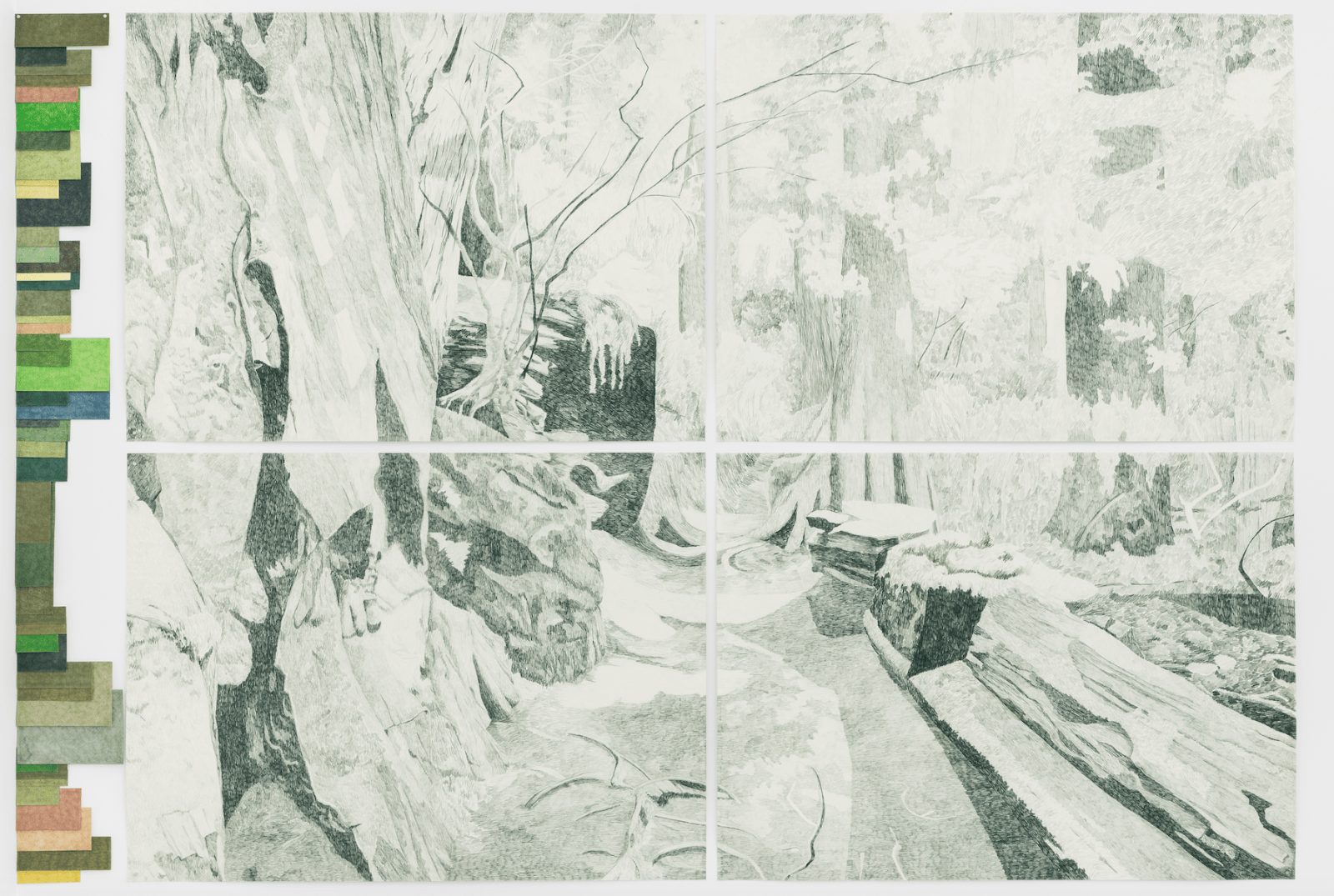
Gabriela Albergaria is a Portuguese artist based in Lisbon and London. Albergaria's work involves one territory: Nature. Nature is manipulated, planted, transported, set in hierarchy, catalogued, studied, felt, and recalled through the ongoing exploration of gardens/cultural landscapes in photography, drawing and sculpture. The artist views gardens/cultural landscapes as elaborate constructs, representational systems and descriptive mechanisms that epitomize a set of beliefs that are employed to signify the natural world. Gardens are also environments dedicated to leisure and study, cultural and social processes that produce a historical understanding of what defines knowledge and pleasure. More generally, the images of gardens and plant species employed by the artist are used as devices to reveal processes of cultural change through which visions of nature are produced or altered. Mediated by representation systems Albergaria’s works generate different versions of landscape—itself a complex system of structures and visual hierarchies, cultural constructs. Among her recent institutional shows are
Desencaminharte 2018 Permanent piece at Parque de Lazer do Castelinho, Vila Nova de Cerveira, Portugal; 2018/2019
La Fabrique du Paysage, Galerie Duchamp centre d' art contemporain de la Ville d'Yvetot, France. Curated by Alice Mallet and Julie Faitot; 2018
Inanimate Object, or
the Complete Circle of the Soil, Sheffield Park and Garden National Trust, UK;
Amazônia: Novos Viajantes, MUBE, Museu Brasileiro da Escultura e Ecologia (São Paulo, SP), curated by Cauê Alves and Lucia Lohmann;
Segunda Natureza, Kreeger Museum, Washington DC, Curated by Luisa Especial.
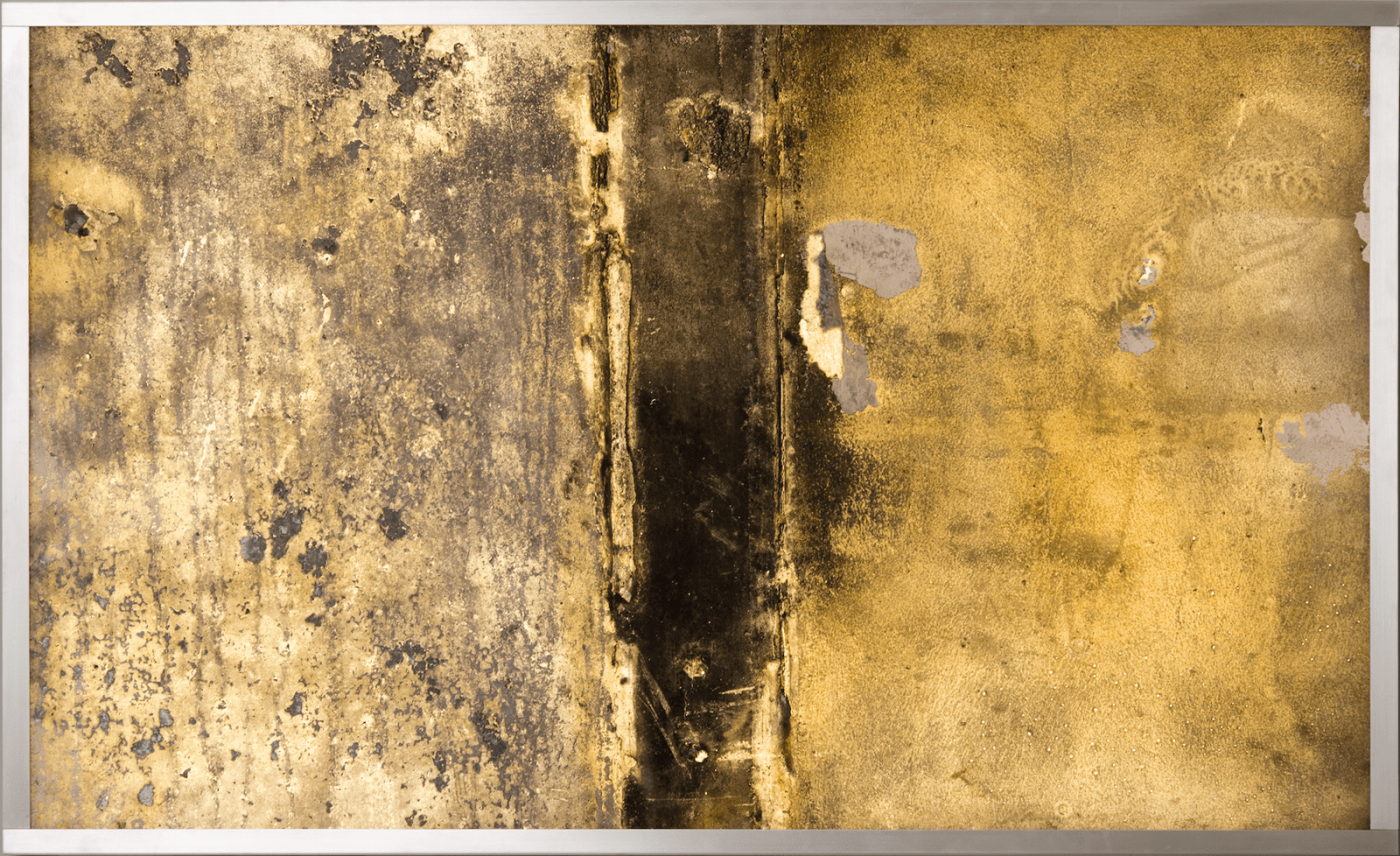
Jorge Otero-Pailos is a New York-based artist and preservationist best known for making monumental casts of historically charged buildings. Drawing from his formal training in architecture and preservation, Otero-Pailos’ art practice deals with memory, culture, and transitions, and invites the viewer to consider buildings and functional objects as powerful agents of change. His site-specific series,
The Ethics of Dust, is an ongoing, decade-long investigation resulting from cleaning dust and the residue of pollution from monuments such as the Doge’s Palace in Venice; Westminster Hall in the Houses of Parliament, London; the U.S. Old Mint in San Francisco; and Trajan’s Column at the Victoria & Albert Museum, London. Otero-Pailos’ works are to be found in the collections of SFMoMA, The Museum of London; The Ulster Museum, Belfast, Northern Ireland; The Whitworth, Manchester; The Glynn Vivian Art Gallery, Swansea; Kelvingrove / The People's Palace, Glasgow; and Thyssen-Bornemisza Art Contemporary in Vienna. He participated in the 53rd Venice Art Biennial (2009), and the Chicago Architecture Biennial (2017), among others.He is Director and Professor of Historic Preservation at the Columbia University Graduate School of Architecture in New York. He studied architecture at Cornell University and earned a doctorate in architecture at M.I.T.
Courtney Skipton Long, Ph. D is a curator and historian of art and architecture. She has curated exhibitions at the Yale Center for British Art, the Huntington Library and Art Museum, and the Bruce Museum. Her publications investigate the intersection of architectural history and natural science from the nineteenth century to now. She is currently the Acting Assistant Curator of Prints and Drawings at the Yale Center for British Art.
SAPAR Contemporary Gallery + Incubator is the brainchild of Raushan Sapar and Nina Levent. SAPAR Contemporary’s artists span three generations and five continents. They engage in global conversations and develop vocabularies that resonate as strongly in Baku, Almaty and Istanbul as they do in New York, Berlin, Paris and Mexico City. Their artistic practices vary from meditative traditional ink painting to writing programming code; what connects them are the artists’ capacity for empathy, insight, and imagination; their whimsy and generosity of spirit; and the rigor and depth of their studio practice.