A text written by Cường Minh Bá Phạm in response to nothing belongs to us by Vicky Đỗ.
Music is life. But entering into LIFE is also entering into the DEATH process every day lived is a step closer to death and every sound sent OUT is a breathing IN on silence. Music goes on permanently and hearing it is like looking at a river which does not stop running when one turns away. The eye hears and the ear sees.
Trinh T Minh Ha, When the Moon Waxes Red.
In the short story "Mây Trắng Đã Bay" (White Clouds Flying) by Bảo Ninh, the protagonist lost her son, a pilot in the American War in Vietnam; he died while flying over the DMZ. The mother has never been able to retrieve the body. She takes a plane journey, for the first time in her life, and as it approaches the 17th parallel, she pulls out a photo of her son and fruits to commemorate her son's death. This story is about the importance of remembrance of the dead and the lengths we go to in order to carry out said commemorations. While the aforementioned pilot was celebrated as a war hero by the victorious Democratic Republic of Vietnam (North Vietnam), the mother still spent years yearning to provide a commemorative ritual. So, the question then is, how do we deal with the departed, whose deaths are not acknowledged, commemorated, or worse denied, and how does this affect the people and communities closest to them? How can we seek to understand the loss and suffering a person or community goes through if we never lived through the event?
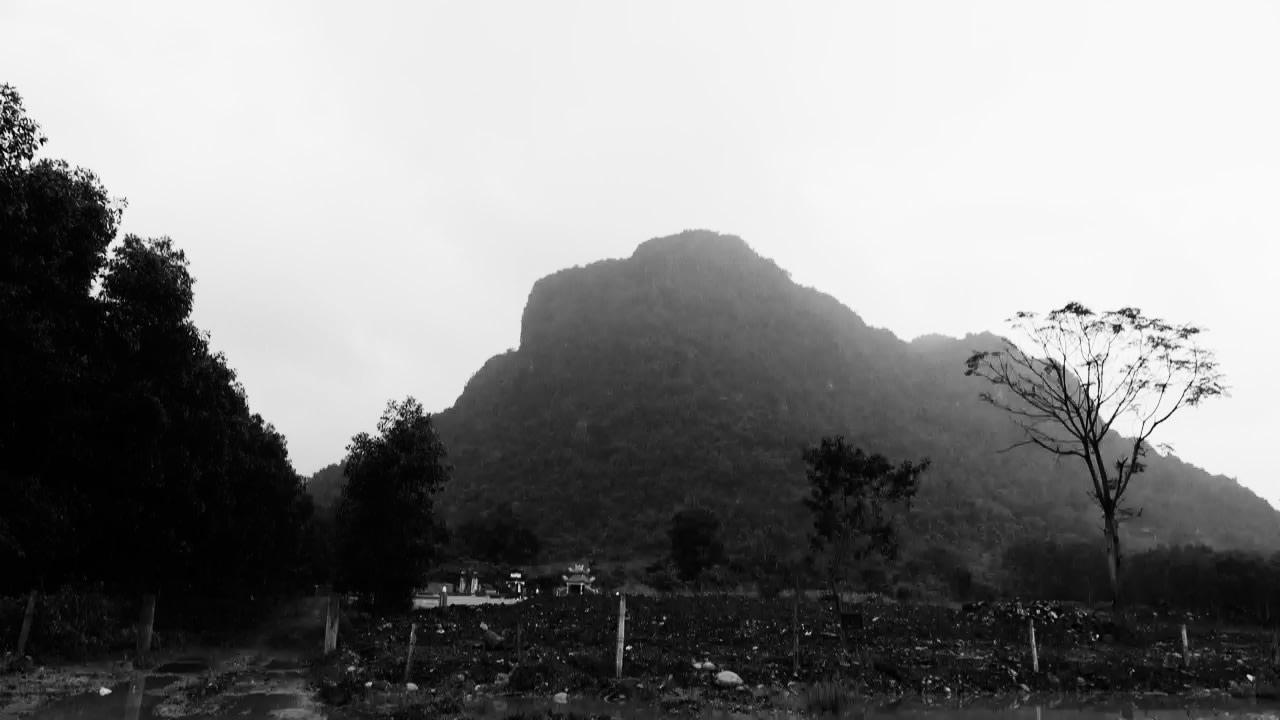
During the American War in Vietnam, Quảng Trị became the centre of some of the most intense flashpoints of the war, owing to its status as the northernmost province of the Republic of Vietnam (South Vietnam). This was further exacerbated by the presence of numerous U.S. military bases in the region, leading to significant battles such as the Tết Offensive (1968), the Battle of Khe Sanh (1968), and the Easter Offensive (1972). In 'nothing belongs to us,' the film takes the viewer across the province. With the assistance of local tour guides, Vicky leads the viewer to the sites of past conflicts while also drawing attention to voices that are often overlooked. One such story revolves around the 'Highway of Horrors' (Đại Lộ Kinh Hoàng), where a large-scale loss of soldiers from the Republic of Vietnam (South Vietnam) and civilians occurred during the Easter Offensive. According to official Vietnamese historiography, the incident is acknowledged, but it is claimed that the PAVN (People’s Army of Việt Nam) were targeting retreating ARVN soldiers. However, various published accounts of the incident, including that of the tour guide from the film, state that civilians were also killed. When death is publicly acknowledged and mourning is allowed, families and communities already face difficulties in fulfilling funerary and ritualistic rites. However, what happens when the families and communities of the aggrieved are denied this opportunity?
In traditional Vietnamese belief, great importance is placed on proper funeral and commemorative rituals. Death occurs when the soul leaves the body. Dying in the comfort of one’s home or a hospital, surrounded by loved ones, where the individual has lived a long life is the most desirable death. It is also believed that there are two souls: the phách (vía), which remain near the body, while the hốn leave the body and are taken away to the land of the dead, âm. However, in the case that one encounters the event of chết oan (grievous death), such as drowning in rivers, lakes, or seas, dying accidentally on the road, or dying of misery without receiving a decent grave, it means they are not taken care of by family or friends. A popular belief is that the souls of the lost would perpetually inhabit the liminal space between âm, the world of the dead, and dương, the world of the living. The uninterred dead would become angry ghosts and would haunt their families and communities where they died. It is said that out in the countryside in the pitch of the night, their shrill lamentations echo across the land.
In our correspondence, Vicky Đỗ shares that following the subsequent deaths of her grandfather and her good friend T, both of whom were born in Quảng Trị, she decides to take a trip there. Vicky Đỗ spoke of how Quảng Trị haunted both until the last moments of their lives and how they were unable to talk about what happened there. She notes in her reply, “The last scene was of an abandoned church at the Highway of Horrors (Đại Lộ Kinh Hoàng). I stood there for a long time and felt incredibly upset. The memory of that summer in '72 is being erased as the generation that lived through it started to perish. Only relics remain, but they can’t talk. T and my grandfather also couldn’t talk much when I asked them about 1972. They just looked very sad. When I was there, I understood.” During this journey, Vicky Đỗ opened herself up to be deeply affected by the emotions and experiences of grief, grappling with the complexities of bereavement and the weight of history, searching to make sense of the pain and suffering of those who call Quảng Trị home. nothing belongs to us is an empathetic offering to her grandfather, her dear friend T, and others who have lived through the grief of conflict. Through this journey, she comes to realise the transformative power of being a witness to the past and honouring the memories of those who have been lost. This film is a reminder that, even in the face of unspeakable tragedy, one can find solace in the healing power of remembrance.
Cường Minh Bá Phạm is an artist and curator currently living in Taiwan
|