Love is rarely simple.
It flutters between tenderness and turmoil, devotion and loss, desire and fear. For centuries, artists have returned to this duality, because love, like art itself, is never only sweet.
This Valentine’s Day, we look at love through its contradictions: beauty and decay, intimacy and distance, attraction and unease. A yin and yang of emotion, reflected in three artistic practices that address love’s darker undercurrent rather than hiding it.
|
|
|
Damien Hirst: Beauty That Knows It Will End
|
|
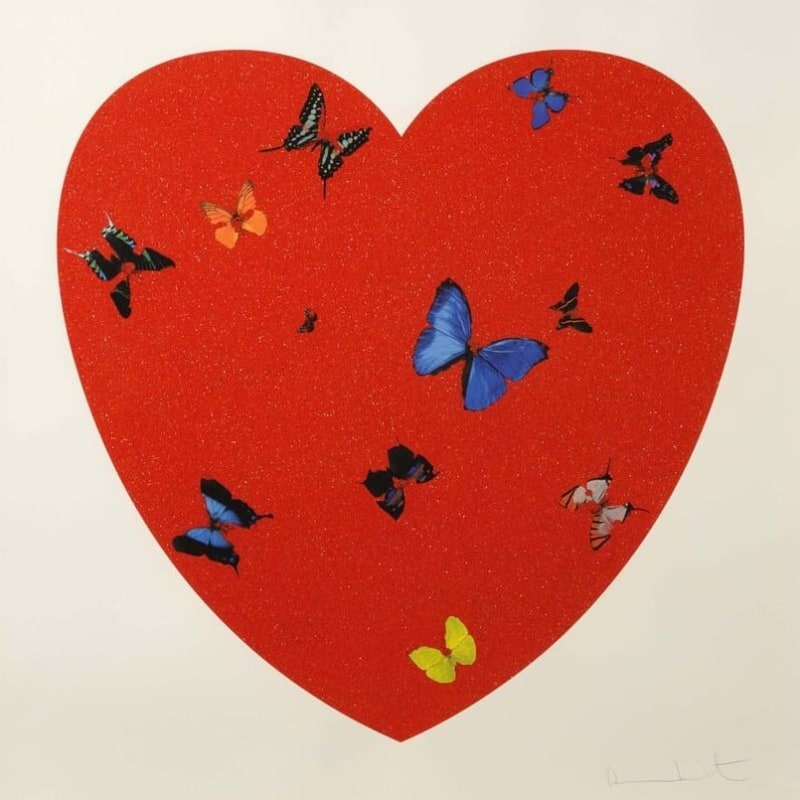
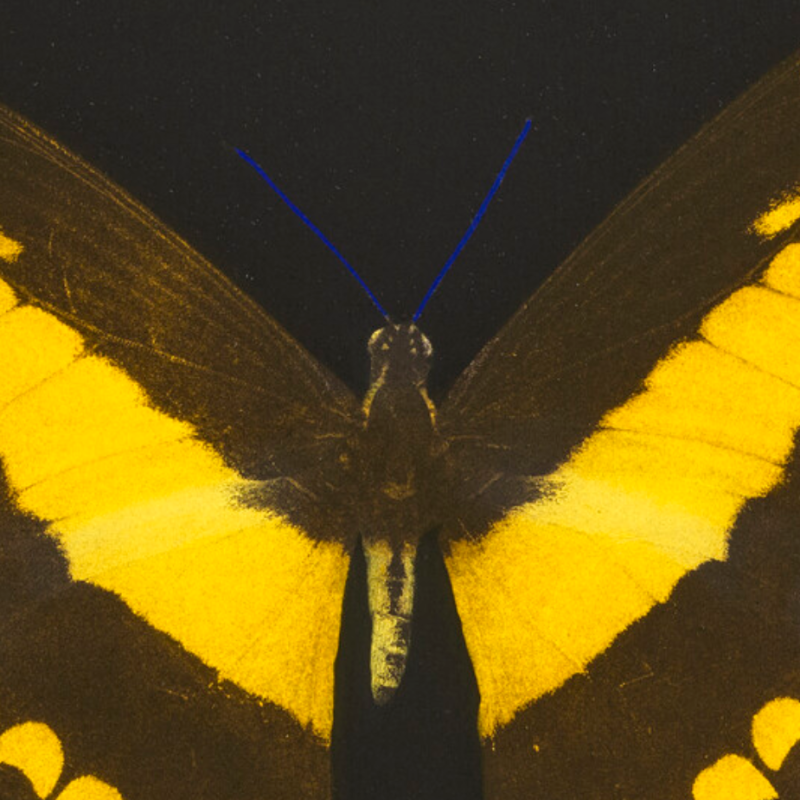
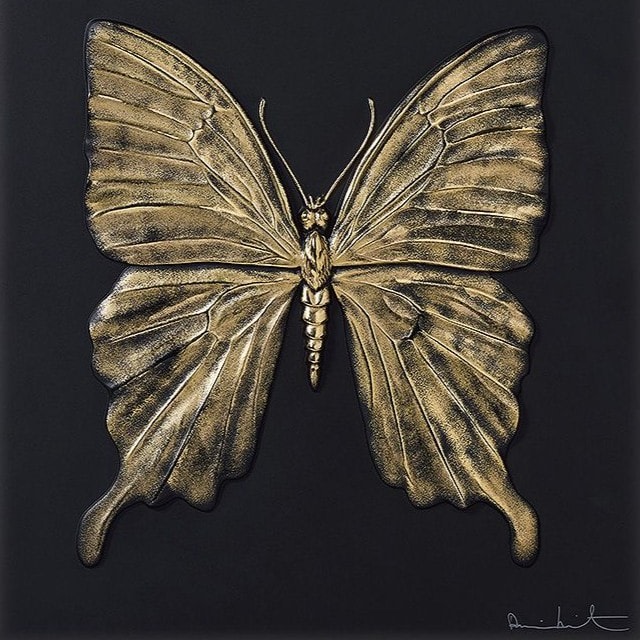
Few motifs capture the ambivalence of love as clearly as Damien Hirst’s (b. 1965) butterflies. Radiant, delicate, and fleeting, they are at once symbols of vitality and reminders of mortality. In his work, Hirst elevates the butterfly to a contemporary memento mori: a celebration of life precisely because it is temporary. The butterfly’s wings shimmer with colour, yet they also carry the quiet knowledge of inevitable decay. This tension between pleasure and impermanence echoes the emotional risk of loving fully. To love is to accept loss in advance. Hirst doesn’t offer comfort here, but clarity: beauty matters because it does not last. His butterflies invite both carpe diem and reflection, urging us to stay present while we can. |
|
|
|
Damien Hirst
All You Need Is Love, Love, Love
|
|
Damien Hirst
Plate 6, from: The Souls on Jacob's Ladder Take Their Flight (detail)
|
|
|
|
Damien Hirst
Eternal Beauty (Black & Gold)
|
|
Damien Hirst
Taytu Betul (The Empresses, H10-5)
|
|
|
Renate Bertlmann: When Romance Draws Blood
|
|
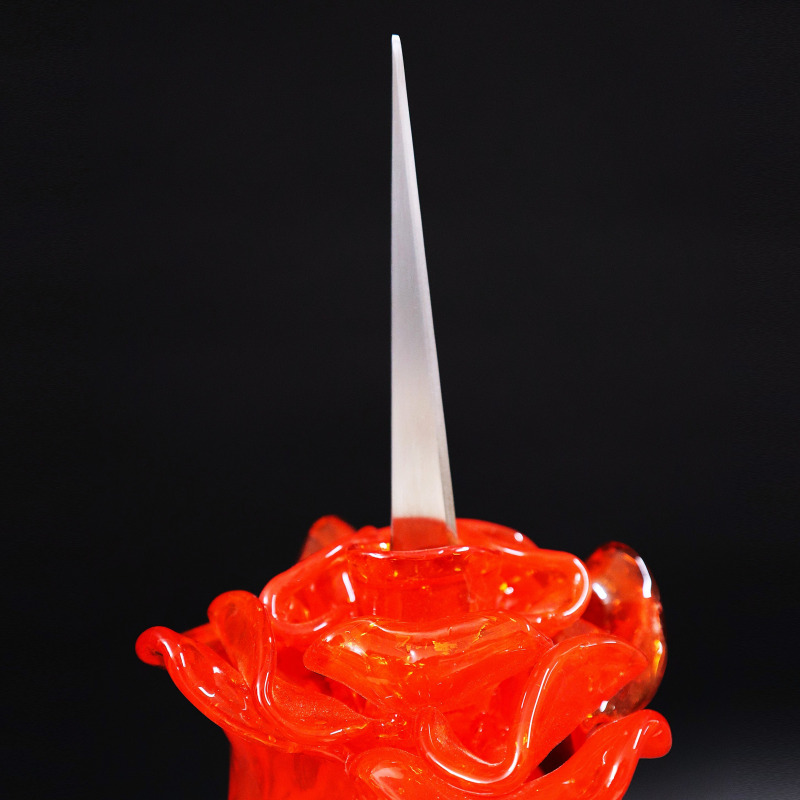
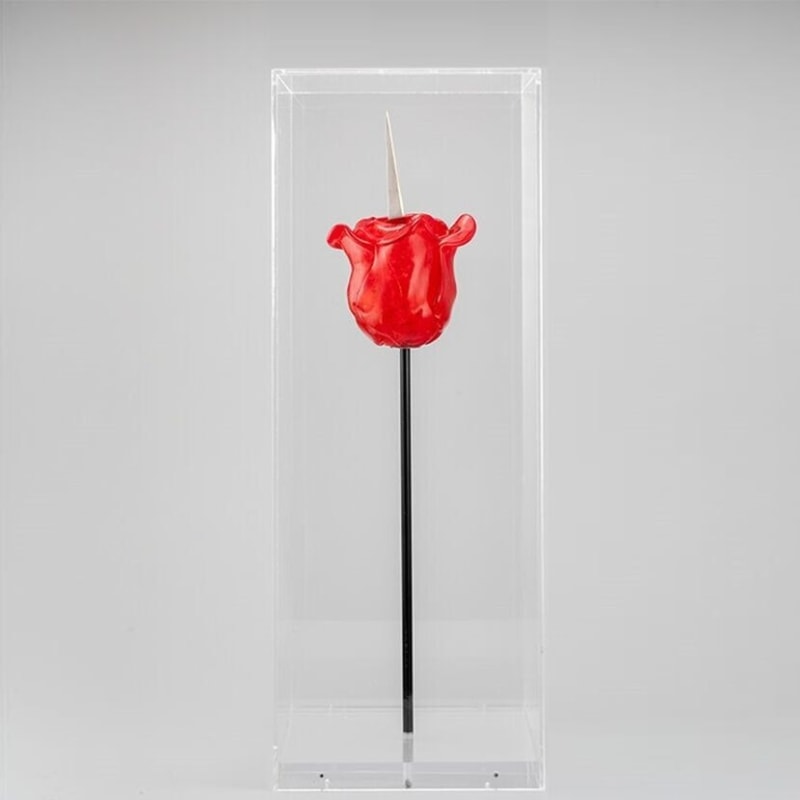
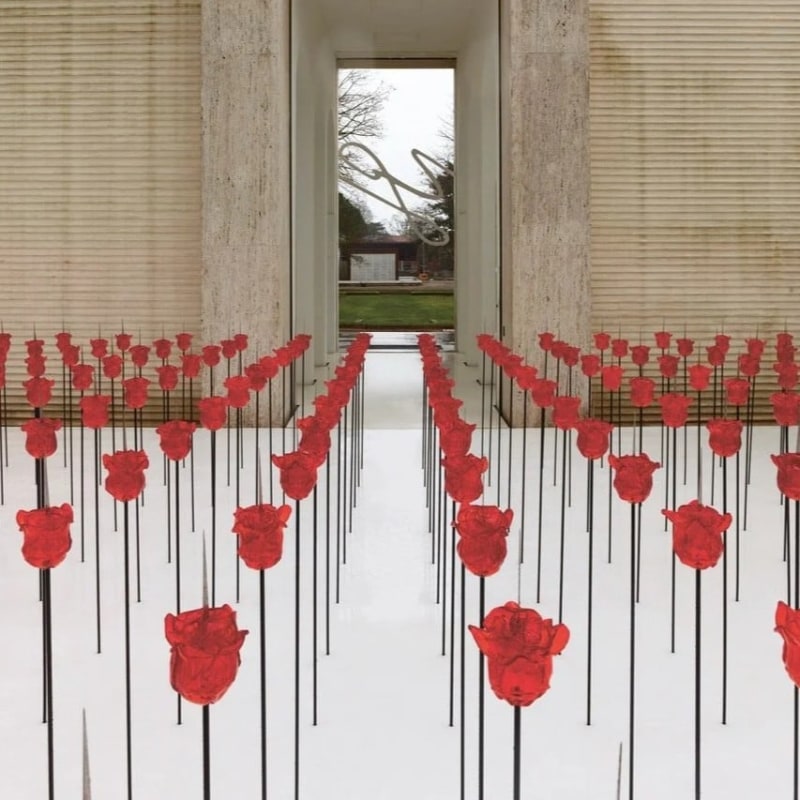
If love is often idealized, Renate Bertlmann (b. 1943) insists on exposing its sharp edges. Her iconic pairing of the rose and the knife collapses romance and violence into a single, unsettling image. The rose - soft, fragrant, historically coded as feminine and desirable - is pierced by an object of threat and power. Bertlmann’s feminist practice has long interrogated intimacy as a site of imbalance, vulnerability, and resistance. Representing Austria at the Venice Biennale in 2019, she transformed symbols of love into declarations of autonomy, refusing the notion that romance must be passive or painless. In Discordo Ergo Sum (2019), love is no longer a promise of harmony, but a field of tension where desire, conflict, and self-assertion coexist.
|
|
|
|
Renate Bertlmann
Discordo Ergo Sum: Knife-Rose
|
|
Renate Bertlmann
Discordo ergo sum
Installation for Austrian pavilion at Venice Biennale
|
|
|
Douglas Gordon: Desire, Reflection, and the Self
|
|
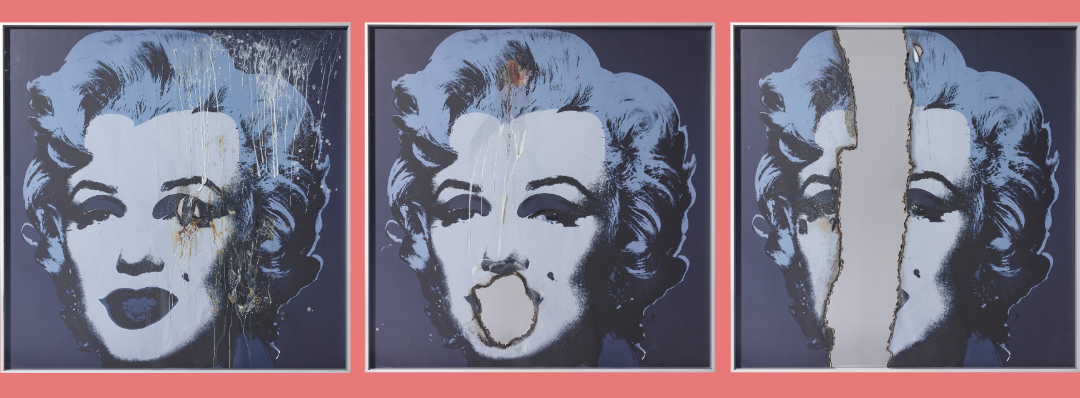
Douglas Gordon’s (b. 1966) mirrored portraits of Marilyn Monroe offer another kind of duality. Marilyn remains one of the most enduring symbols of beauty, desire, and adoration; yet her image is inseparable from fragility, isolation, and tragedy. Gordon’s work does not simply depict her; it implicates us. As mirrors, these pieces collapse distance between subject and viewer. We see Marilyn, but we also see ourselves - our projections, fantasies, and longings reflected back at us. Love, here, is not only something we feel for another, but something shaped by our own desires and myths. Gordon reminds us that love is never neutral: it is always layered with illusion, identification, and self-recognition.
|
|
|
Portrait of a Self Portrait of a Self, as Marilyn (Set of 3) |
|
|
Together, these works resist Valentine’s Day clichés. They suggest that love is not a polished surface, but a complex emotional structure, at once intoxicating and unsettling. It is beautiful because it is fragile. It wounds because it matters.
This Valentine’s Day, we celebrate love in all its contradictions.
|
|
|
Follow us on Social Media |
|
|
|