The Sound of the Grid: Piet Mondrian, Peter Halley, and the Logic of Swing |
|
There were moments in art history when painting begun to behave like music.
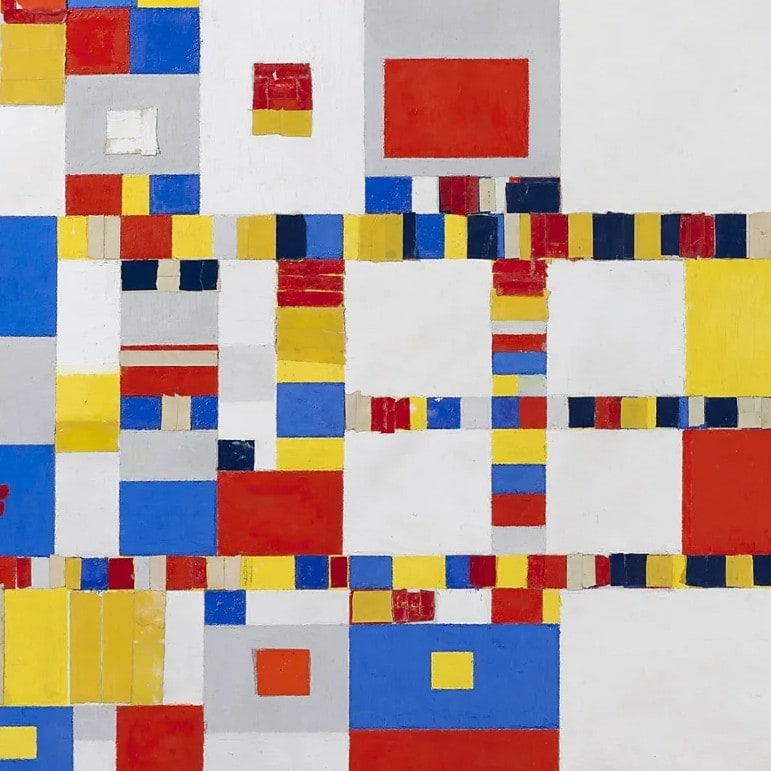
In 1940, when Piet Mondrian (1872-1944) arrived in New York City, he encountered not only a new skyline but a new sound: jazz, and especially boogie-woogie - a fast-paced piano blues that emerged in African American communities in the 1870s and gained broad popularity in the 1920s. Its syncopation, its forward drive, its dynamic interplay of structure and improvisation resonated deeply with his lifelong search for balance through vertical and horizontal lines.
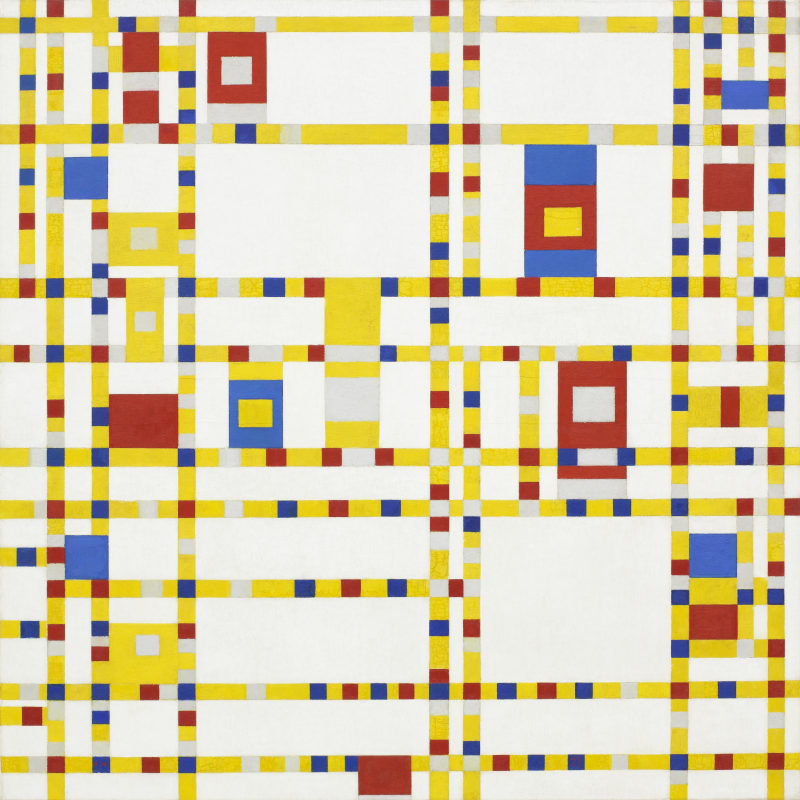
In his last paintings - Broadway Boogie Woogie (1942-1943) and Victory Boogie Woogie (1944) - the grid does not sit still anymore: it vibrates. Small blocks of red, blue, and yellow flicker across the canvas like illuminated windows or musical notes across a staff. The rigid black lines of earlier compositions dissolve into pulsating bands of colour. The city grid and the rhythmic grid merge. What we see is not simply geometry. It is swing translated into structure. |
|
|
|
Piet Mondrian
Broadway Boogie Woogie
|
|
|
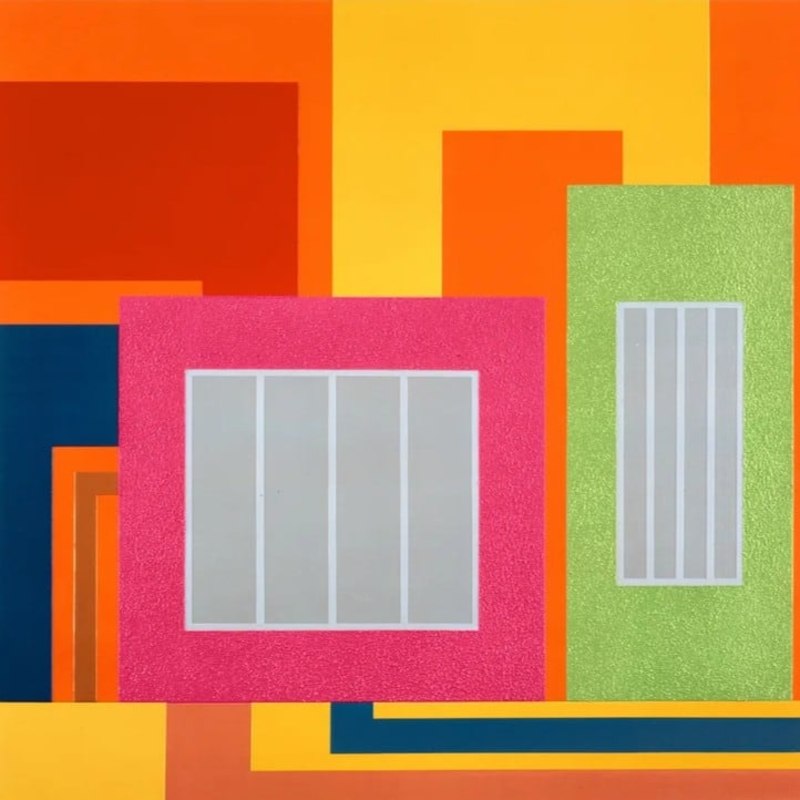
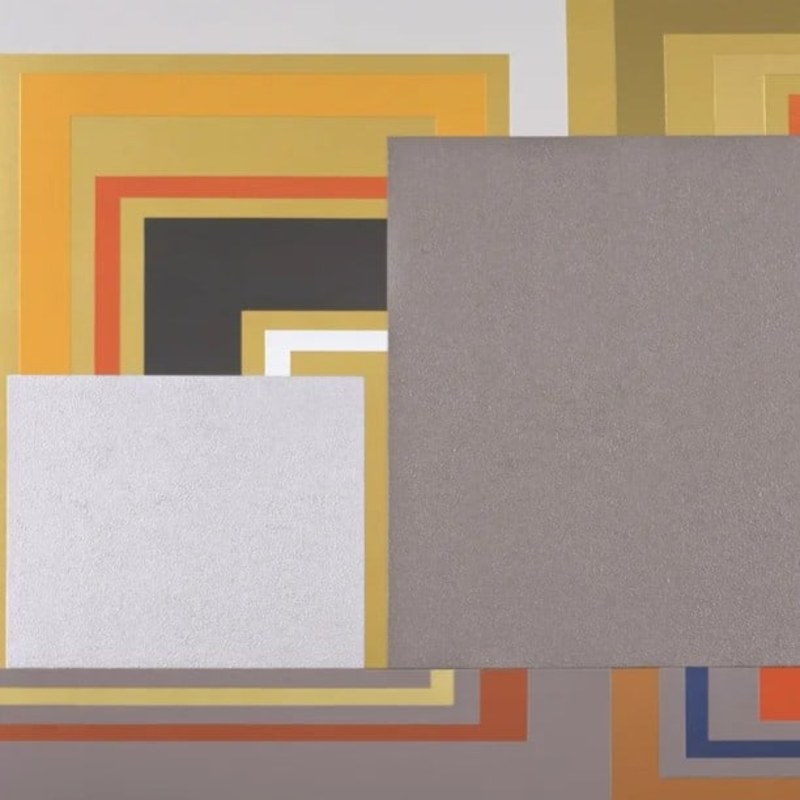
Decades later, in a different New York shaped by digital networks and fluorescent light, Peter Halley (b. 1953) approaches the grid with a comparable sense of rhythm. His compositions of “cells” and “conduits” are often read as diagrams of social space, architectures of connection and isolation. Yet they are equally choreographies of repetition and interruption. Lines advance, halt, turn sharply; luminous fields of acid yellow, electric pink, and saturated blue throb against one another. |
|
|
Like jazz, Halley’s work depends on tension within a system. The geometry establishes the beat. Colour provides the improvisation. Where Mondrian absorbed the syncopation of 1940s swing clubs, Halley translates the pulse of late-20th-century urban life: its circuitry, its data streams, its fluorescent nights. Both artists treat abstraction not as silence but as sound. Their grids are not static frameworks; they are scores. Each intersection is an accent. Each block of colour, a note struck against the whole.
|
|
|
|
Piet Mondrian
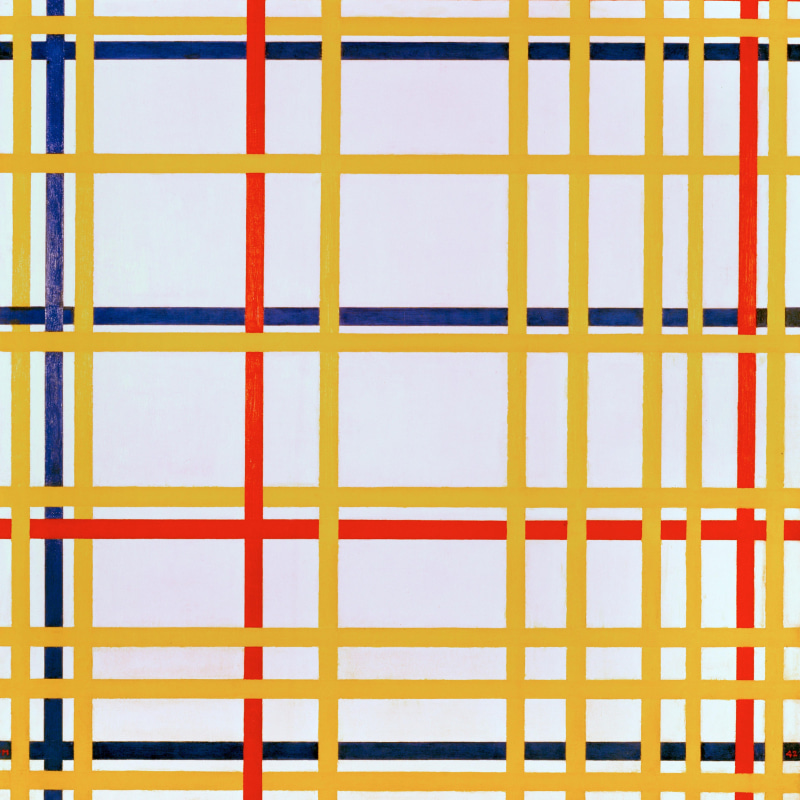
New York City I
|
|
Peter Halley
Cruel Intentions
|
|
|
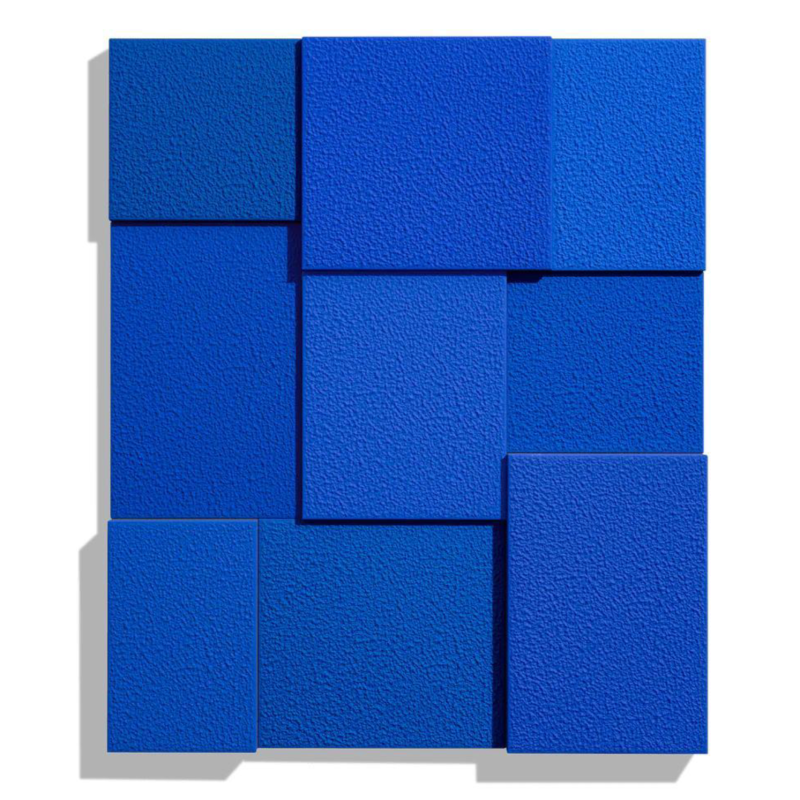
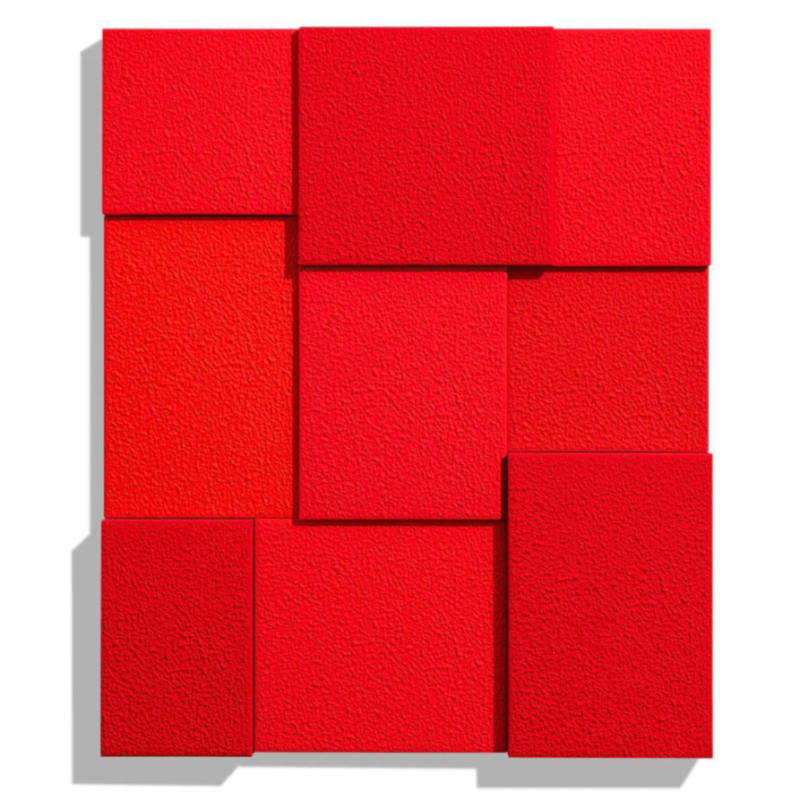
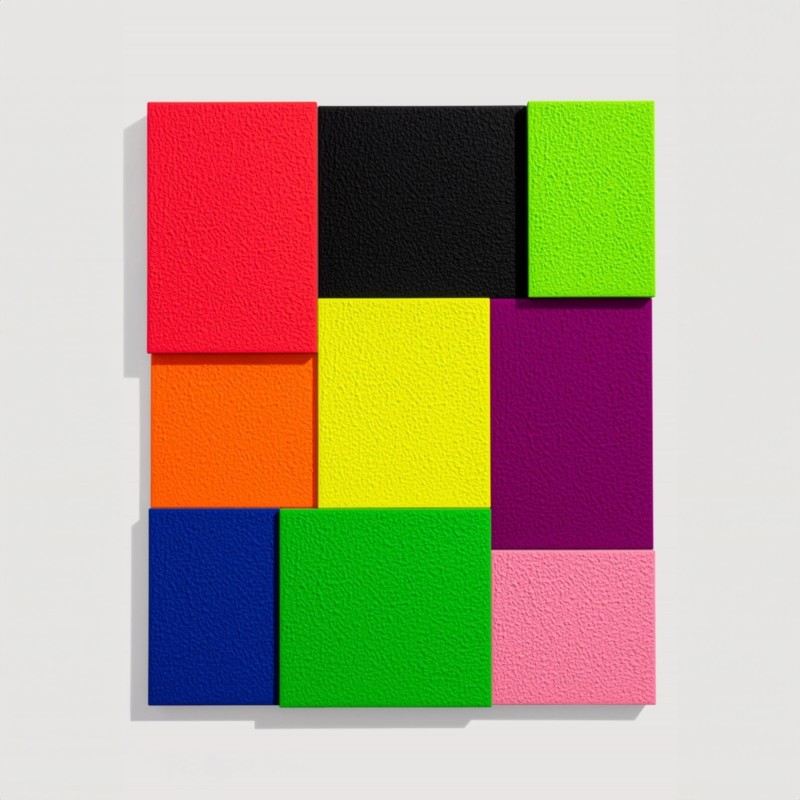
In Color, Nine Times (2023); Red, Nine Times (2023); and Blue, Nine Times (2023), this musicality is especially tangible. Repetition unfolds like a visual riff. Motifs return in altered tonalities. The eye moves across the surface the way the ear follows rhythm: anticipating pattern, registering variation, feeling momentum.
|
|
|
|
Peter Halley
Blue, Nine Times
|
|
Peter Halley
Red, Nine Times
|
|
|
|
Peter Halley
Color, Nine Times
|
|
Peter Halley
Color, Nine Times (detail)
|
|
|
What unites Mondrian and Halley, ultimately, is not simply the grid. It is the conviction that modern life has a rhythm, and that painting can capture it. Jazz offered Mondrian a vocabulary for visual syncopation. Halley, in turn, extends that legacy in a contemporary key, amplifying the beat with the charged intensity of his unmistakable palette.
Abstraction, in their hands, swings.
|
|
|
Reply to this email to inquiry, or book a call with us to take a closer look.
|
|
|
Follow us on Social Media |
|
|
|